Build Your Own AI Connectors and Ditch Subscriptions


How many software subscriptions are sleeping in your SMB? A design tool opened twice a month, a video platform used three times a quarter, a SaaS kept "just in case". Every month the invoice lands, whether you use it or not.
A creative professional found something better. He needed the latest generative models for his content but refused to pay a subscription for sporadic usage. His solution: he had his own AI agent build him a custom connector to an API billed per usage. Result: the same models, zero subscription, and a bill that follows actual usage.
The interesting part isn't the savings. It's the method, because it applies to all your tools.
The subscription trap
Look at how the reasoning was built.
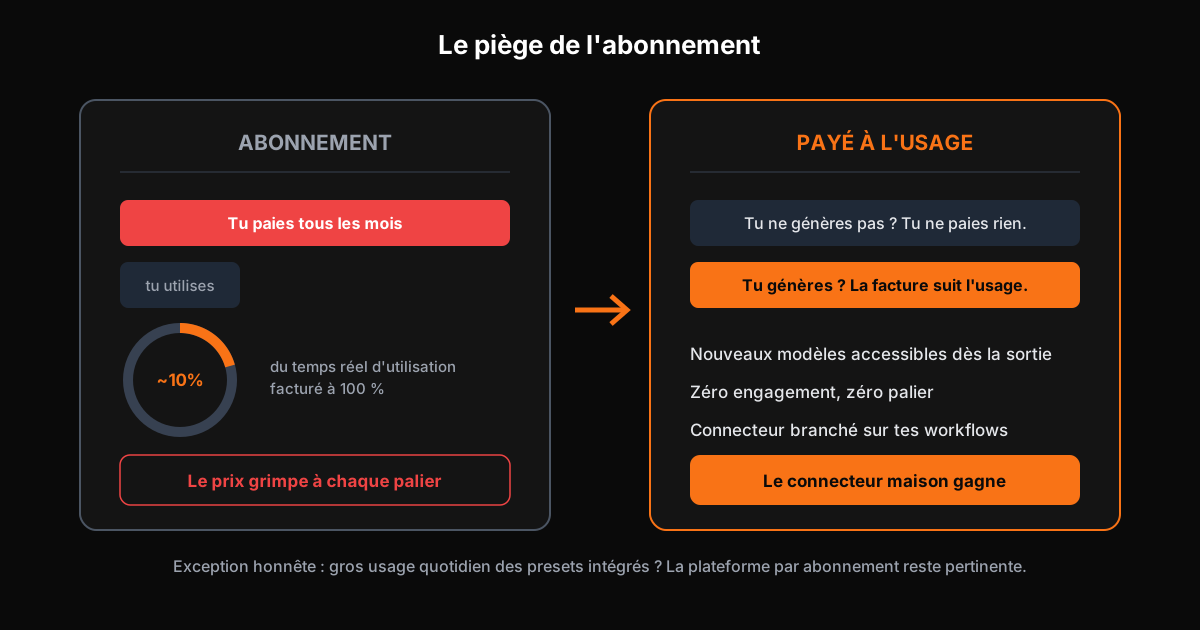
The need: generate videos, images, music with the latest models. Market platforms offer that on a monthly subscription. Classic problem: you pay for 30 days of access to use it 3 hours, and the price climbs with each feature tier.
The alternative: go directly through an API aggregator billed by credit consumed. You generate, you pay. You don't generate, you pay nothing. And you access new models the day they ship, without switching tools or starting another subscription.
There's an honest trade-off to acknowledge here. Subscription platforms have real advantages: built-in presets, turnkey ecosystems, interfaces designed for creatives. If you use those presets all day long, they remain relevant. But if your usage is occasional and you want control over your workflows, the custom connector wins.
And there's an even deeper argument.
Adaptability is the only durable asset
This creator has worked in AI for over three years, and his conclusion deserves to be carved in stone: depending on a single tool is impossible.
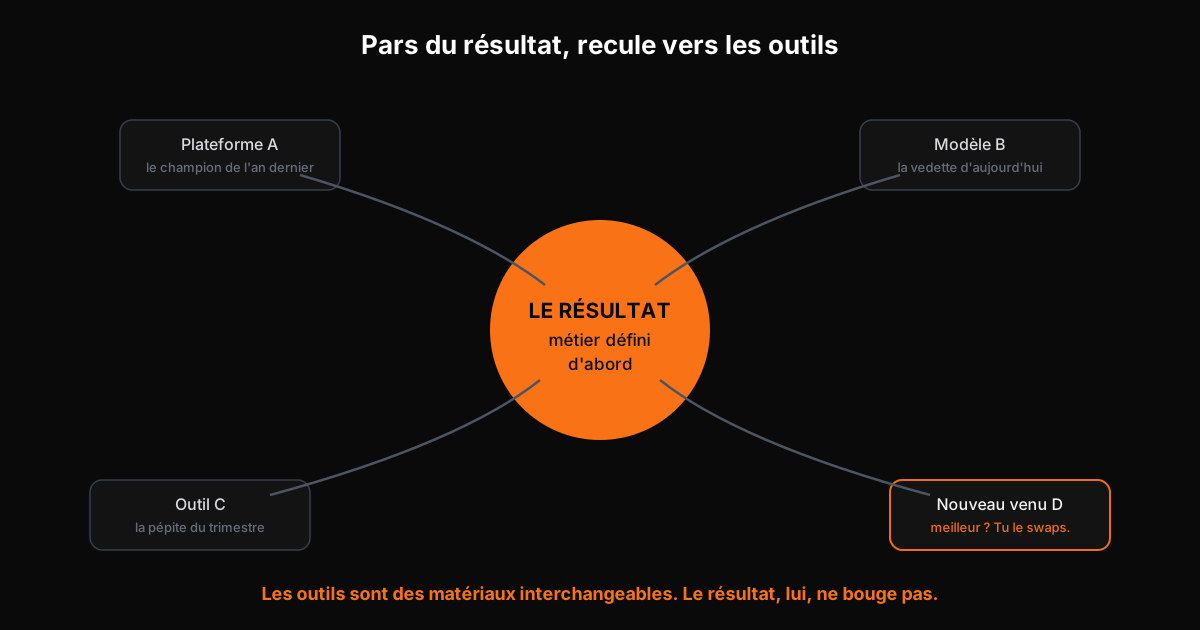
Just look backward. A year ago, every category had its champion: one dominant text model, one star video platform. Today, the landscape has been completely redrawn. In six months, it will be redrawn again.
Whoever built everything on the 2025 tool starts over from zero in 2026. Whoever knows how to have connectors built swaps tools in an afternoon. The difference between these two profiles isn't budget: it's a skill, and it can be learned.
The method: a skill that builds connectors
Here's the part that should interest you most. He didn't hand-code his connector. He created a skill, a sort of instruction manual his agent follows, and the agent built the connector end to end.
The process, as it unfolds inside a session:
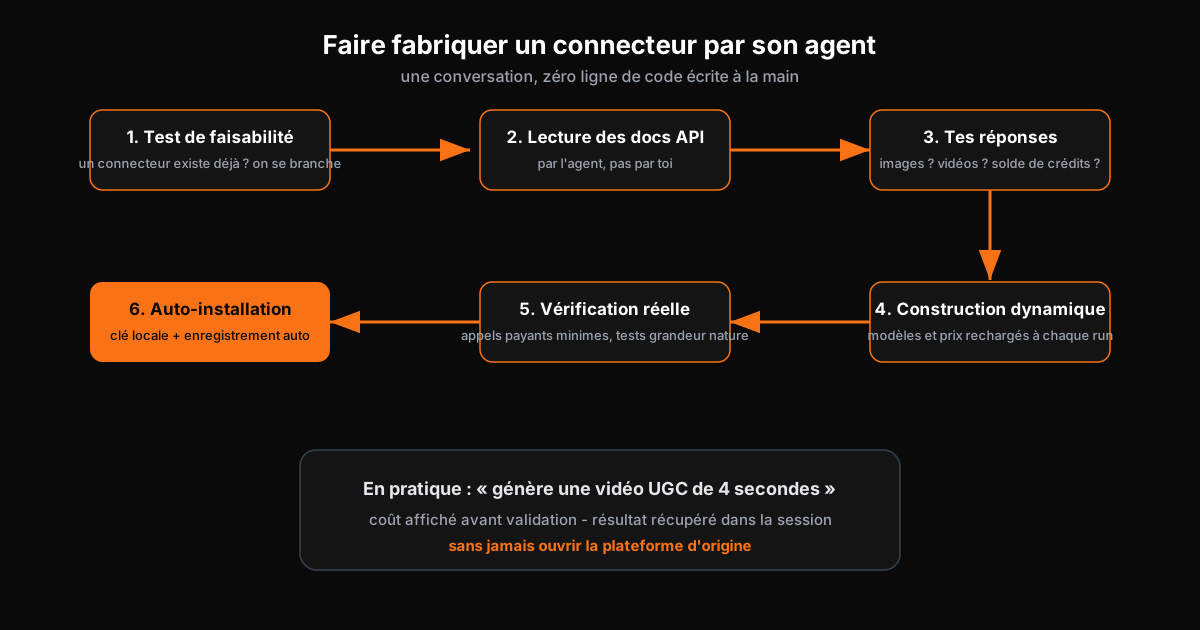
Step 1: the feasibility check. Before building anything, the agent verifies whether the target tool already offers an official connector. If so, no need to build one: just plug into theirs. This check eliminates 90% of wasted work.
Step 2: reading the docs. The agent dives into the target platform's API documentation itself. Not you. That's precisely what nobody wants to do, and exactly what a machine does well.
Step 3: the questions. The agent asks what you want to do: generate images? Videos? Check your credit balance? You answer in plain language, like a conversation.
Step 4: dynamic construction. Crucial point: model catalogs change constantly. So the connector is designed to fetch the up-to-date list of available models and prices at every run. When the next version of the video model ships, the connector handles it without intervention.
Step 5: real verification. The agent performs minimal paid calls to confirm the server actually works. No theory: live tests.
Step 6: automatic registration. Last step, the one that saves an hour of tutorials: the connector installs itself into your various environments, with your API key stored locally in a config file.
Two minutes of setup, one restart, and the connector shows up in the list. The live demo tells the story: request a short generative video from within the session, see the cost displayed before approval, approve, collect the result. Without ever opening the original platform.
Stack the bricks
A connector is a foundation. On top of it, you build.
Same principle as for the connector: describe the outcome, let the agent manufacture the brick. A skill that produces real estate videos from photos? Research the sector's best prompt practices, turn them into a reusable procedure. Product videos for your e-commerce campaigns? Same mechanism, plugged into the connector.
And the author pushes the logic all the way through his own production chain: an agent that publishes his tools online, an agent that generates the associated thumbnails and visuals, an agent that updates his website. His personal role boils down to approving.
That's the real loop: every solved problem becomes a reusable component, and every component makes the next problem cheaper to solve.
The three rules to keep
Rule 1: use AI to learn faster. Reading an API doc, understanding a technical format, assembling pieces: those are agent tasks, not human tasks. What took you a weekend now takes twenty minutes.
Rule 2: don't marry a tool. Your value lives in no software. It lives in your ability to describe the outcome you want and have the bridge built to whatever tool delivers it. Today's champions are 2027's has-beens.
Rule 3: start from the outcome, work backward to tools. The universal mistake is picking a tool first, then wondering what to do with it. The right approach flips the arrow: define the business result, then treat tools as interchangeable materials. A better tool arrives? You swap it in. Nothing else moves.
What this changes for your business
Translate this into SMB language. Your company has probably been stacking SaaS subscriptions for years: CRM, design, video, automation, reporting. Some are essential. Many serve three times a quarter and cost plenty for nothing.
The approach described here applies word for word to that situation: audit actual usage, identify dormant subscriptions, and replace where it makes sense with usage-billed connections built by your agents. Same logic for internal processes: wherever you were copy-pasting data between two tools because no connector existed, your agent can now build that missing connector.
My job is exactly this: mapping your tools and processes, having your agents manufacture the missing bricks, and cutting what you pay without using. A free 45-minute audit identifies how much your stack costs you pointlessly and what custom connectors would replace. Most companies discover they're funding software that isn't working for them.
See also the AI glossary
Browse the full AI glossaryTake action: your Express AI Audit (45 min)
45 minutes with an AI expert to evaluate your operations, identify productivity gains and map your first high-ROI AI agents.
Designed for SME leaders (10 to 100 staff) · No commitment · 100% IP ownership
Deploy AI Agents in your SME with an External CAIO
Get an outsourced AI Director 1 to 10 days per month to audit, automate your workflows and train your teams.
Stay ahead of AI Innovations
Every week, get a curated selection of our latest articles, case studies, and actionable AI insights directly in your inbox. No spam, 100% value.
Fractional AI Director locations