Parallel Agents: The Architecture That Multiplies Your AI Teams

The Sequential Agent Problem
You launch an agent. It processes one task. Then another. Each step waits for the previous one. Slow, linear, and missing the real power of automation.
The "one agent, one task, one result" pattern is a bottleneck that most setups reproduce without noticing.
An Agent is a Role, Not a Topic
The most common mistake: creating one agent per target. "An agent to analyze Company A, another for Company B."
An agent is a role, not a topic.
Create ONE "researcher" agent and point it at 50 targets. It has one skill (research, analyze, structure) and applies it to as many subjects as needed. This is the difference between hiring 50 interns and having one project manager who knows how to delegate.
Ask yourself: if I needed to process 100 targets instead of 10, would I have to rebuild my architecture? If the answer is yes, your design is not scalable.
The Funnel Architecture
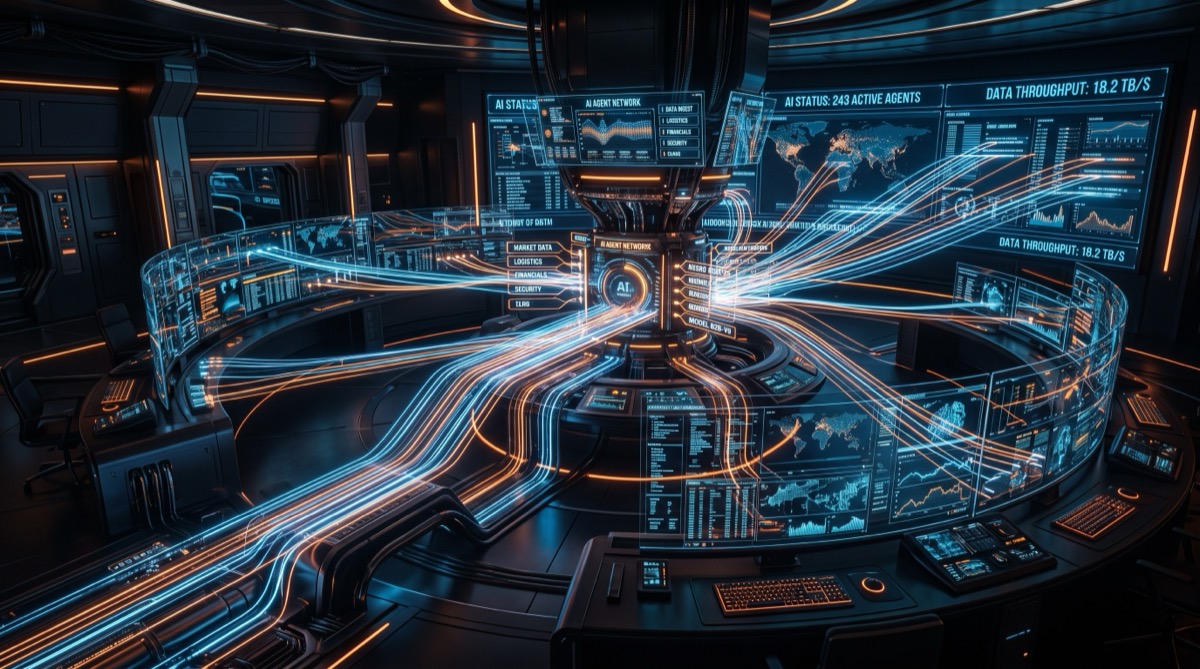
The key pattern: parallel "worker" agents, followed by a "synthesis" agent that waits for all to complete.
Each worker is independent. The only synchronization point is the synthesis agent, which receives all results and produces a coherent deliverable.
If one worker takes 30 seconds per target and you have 20 targets, the total time is not 10 minutes, it's 30 seconds. Because all 20 workers run in parallel.
Verdicts, Not Data Dumps
A good agent doesn't just collect data. It produces actionable deliverables:
- Verdicts: "This company is an 87% ICP fit"
- Comparison tables: Targets ranked by priority score
- Positioning matrices: Competitive mapping across 5 criteria
- Recommendations: "Start with these 3 targets, here's why"
Don't ask an agent for a list, ask it for a decision.
Dynamic Updates
Adding a target is trivial. Maintain a list, in a database, a file, shared memory. Add a row, and on the next run, the agent processes that new target in parallel. No reconfiguration. No deployment.
Autonomous Operation
The ideal system asks for nothing. It sleeps until its next cron wake-up.
The "daily ping with validation" pattern is the sweet spot between full automation and human oversight.
The Core Principle: Give the What, Not the How
You specify the outcome, the agent figures out the path.
Give your agent: "Analyze these 20 companies and rank them by priority."
Don't tell it: "Go to their website, look at the About page, copy their description..."
When you give the WHAT, the agent finds the HOW. And it gets better with every run.
Multiply processing capacity with an Externalized AI Direction
Running AI agents in parallel allows executing in minutes what previously required days of manual effort.
With our Externalized AI Direction, we deploy parallel architectures:
- Structuring funnel multi-agent workflows (specialized workers + synthesis agent).
- Direct interfacing with your business tools (CRM, databases, spreadsheets).
- Supporting your team to confidently orchestrate and supervise these flows.
🎁 Parallel Architecture Template
Get a ready-to-use template for orchestrating parallel agents with a synthesis funnel.